
Community Contribution
Importance
Community contribution requires a deep understanding of the social and economic context of each area. Sustainable community development initiatives depend on collaboration among multiple stakeholders, including government agencies, private sector organizations, and local communities. However, addressing diverse community needs while ensuring the long-term continuity of projects may face certain challenges, such as limited resources, cultural differences, and communication gaps. These factors can impact participation and trust between organizations and communities. Additionally, improving the competitiveness of local products in terms of quality, standards, and market access remains a significant challenge in creating shared values with communities.
Despite these challenges, community contribution presents opportunities for businesses to develop sustainable practices and build long-term relationships. Active engagement with communities enables Central Retail to better understand their actual needs and challenges, leading to the development of more effective products, services, or initiatives. Moreover, it strengthens corporate reputation, fosters stakeholder trust, and drives innovation through collaboration between businesses and communities. Specifically, the development of local products can create income opportunities, add value to local resources, and stimulate grassroots economic growth.
To generate tangible and sustainable outcomes in creating shared values with communities, Central Retail has adopted a strategic and long-term approach. This includes close collaboration with local communities, investment in quality control systems, and support for knowledge sharing and skills development to enhance the quality of local products. Additionally, targeted marketing campaigns are conducted to raise consumer awareness of local products, along with initiatives to support local business development, fostering sustainable employment and income for communities. These efforts strengthen the relationship between Central Retail and the community, leading to mutual economic and social growth while also establishing a distinctive market position, increasing long-term market share, enhancing corporate reputation, and building stakeholder trust.
Management Approach
Framework for Creating Shared Value with the Community
The ESG team regularly reports to executives and the Corporate Governance and Sustainability Committee on Central Retail's ESG performance. The ESG representatives and Sustainable Development Officers are responsible for leading the execution of community and local product development initiatives in line with the CSVs framework. This involves sourcing locally, partnering with community organizations, and encouraging employee volunteerism. At the operational level, employees are encouraged to volunteer, share knowledge with the communities, and propose innovative ideas to support local product development. Central Retail has set a target for more than 3,000 employees to participate in volunteer activities each year, supported by the Corporate Social Responsibility Policy, which provides clear guidelines for implementation and fosters effective, comprehensive collaboration.
Corporate Social Responsibility Policy
Care for the Community, one of the key dimensions defined under the CRC Care Philosophy, focuses on improving the quality of life of Thai people and reducing social inequalities. Central Retail is committed to the concept of Creating Shared Value (CSV) through community development initiatives that are aligned with its business strategy and sustainable development goals. Furthermore, established principles and processes to consider community investments based on the context and needs of communities, as well as Central Retail’s business capabilities, with the aim of creating positive impacts and long-term shared value through the following six key strategies:
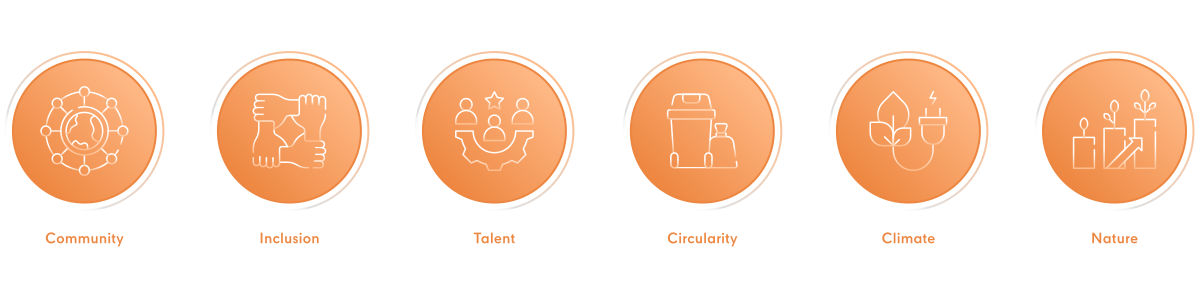
Community - Enhancing capabilities and promoting the local economy
Central Retail focuses on community economic development by conducting activities that enhance knowledge and skills for sustainable income generation and livelihood security. These efforts align with the specific needs of each community in various ways, including:
- Developing local products in terms of product design, packaging, and safety standards
- Investing in developing infrastructure
- Purchasing products for distribution through modern trade channels
- Supporting logistics and transportation
- Assisting with marketing and communication channels
- Providing business knowledge and guidance
Additionally, Central Retail emphasizes reducing social inequality, creating opportunities for all, and fostering holistic community development. It aims to establish learning centers and promote sustainable community tourism, which includes cultural tourism that preserves local traditions, organic agricultural tourism, and eco-tourism that highlights nature conservation.
In addition, Central Retail is committed to addressing global health challenges by promoting good health and well-being within communities, particularly among children and youth. Central Retail supports initiatives that enhance access to basic healthcare services and address key health issues, including HIV, cancer, mental health, and non-communicable diseases (NCDs). These initiatives include health education activities, health screening support, blood donation, medical equipment donations, assistance to patients and communities during disasters, as well as collaboration with government agencies, hospitals, civil society organizations, and international organizations.
Inclusion - Reducing inequality and ensuring equal access to opportunities
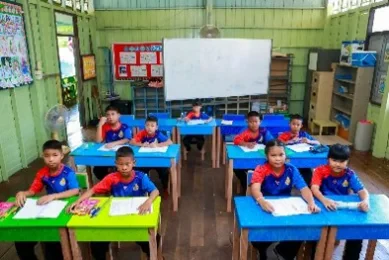
Central Retail is dedicated to minimizing inequality and ensuring equal opportunities, particularly in education for underprivileged children and youth. This is achieved through various educational development programs and social activities that support vulnerable groups. Central Retail promotes education to help disadvantaged youth to acquire competitive skills through eight learning aspects. It also supports teachers in developing coaching skills, reduces rote-based learning, and fosters moral and ethical programs.
Talent - Developing excellence in human resources
Central Retail strives to develop employees to achieve excellence by providing knowledge and professional skills while promoting work-life balance for overall well-being. This is facilitated through various initiatives such as education, training, international study visits, recreational activities, and knowledge-sharing programs. The focus on respecting diversity within the organization fosters an inclusive work culture that ultimately contributes to long-term corporate success.
Circularity - Driving a circular economy
Central Retail is committed to fostering a sustainable green economy by integrating environmental policies within its business operations. It promotes sustainable consumption and production, as well as circular economy principles to maximize resource and waste management. This includes reuse, recycling, and sustainable manufacturing practices.
Climate - Addressing climate change
A key goal of Central Retail is to achieve Net Zero emissions by 2050, or reducing net greenhouse gas emissions to zero. This includes promoting renewable energy share across business operations and encouraging all sectors including employees, executives, suppliers, customers, and partners to adopt energy-efficient practices and participate in environmentally friendly initiatives that align with global sustainability goals.
Nature - Conserving ecosystems and biodiversity
Central Retail prioritizes ecosystem conservation and biodiversity restoration for long-term sustainability. It implements projects to increase green spaces, promote sustainable agriculture through eco-friendly farming methods, restore watershed forests, prevent wildfires, and launch the Central Green initiative. This project aims to enhance urban green spaces, reduce air pollution, and create recreational areas in collaboration with government agencies.
Central Tham
Creating Shared Values (CSVs) Process
Care for the Community, one of the core dimensions outlined in the CRC Care philosophy, focuses on improving the quality of life for Thai people and reducing social inequality. Central Retail plans to achieve this target through expanding CSVs initiatives to other communities. CSVs is Central Retail's primary concept for implementing community contribution and local product development initiatives with following steps below.

1. Community Selection
The selection of communities and project locations is based on the following criteria:
- Potential Product: The community produces high-quality products with strong potential for development.
- Cultural Heritage: The community possesses a rich cultural heritage and unique way of life.
- Environmental Stewardship: The community demonstrates a commitment to environmental conservation and restoration.
- Strong Leadership: The community leaders are skilled at collaborating with community members to improve their quality of life and income.
- Transparency: The community maintains transparency in its operations and decision-making processes.
2. Community Engagement
By conducting surveys, focus groups including vulnerable groups, and public participation, Central Retail can effectively engage with community members and gather valuable feedback. This ensures that community initiatives and local product development programs address the specific needs and priorities of the community.
3. Integrated Community Contribution and Value Enhancement
Product Design and Development
- Collaborate with communities to create innovative products that leverage local wisdom and traditions.
- Enhance local products by adding value to appeal to the global market.
Capacity Building
- Share retail expertise through training and workshops to improve product design, production techniques, quality control, marketing for community members, etc.
Facilities and Equipment Support
- Invest in essential facilities and equipment for production and packaging.
Distribution Channels Support
- Utilize existing sales outlets to support and collaborate with the community through department stores, online platforms, and community programs like Mae Tha Sustainable Living Space Project.
4. Continuous Monitoring and Improvement
- Regularly assess the progress and impact of programs to identify areas for improvement and ensure long-term benefits for both the community and Central Retail.
- Maintain open communication with communities through annual focus groups to collect feedbacks and concerns for adjusting project to meet the needs and circumstances of communities members.
- Establish the whistleblowing system to address any concerns raised by communities and stakeholders.
Project Highlights
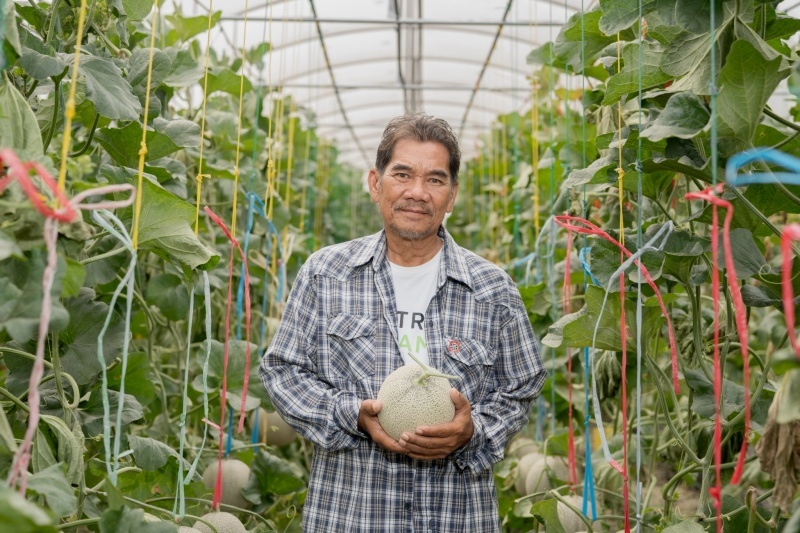
High-Quality Melon: From Local Cultivation to Export Standards Project, Melon Moo Yai Ruamjai Pattana Community Enterprise, Khu Salot, Lat Bua Luang, Ayutthaya
This community development project aims to improve the quality of life for farmers and local communities by creating stable jobs and income, enhancing inclusion, and generating economic opportunities. The initiative encourages the community to adopt modern farming techniques, focusing on high-value crops and increasing agricultural diversity to reduce reliance to monocropping and meet comsumer demand. This led to the development of high-quality melon products under the brand ‘Smile Melon’, by the Melon Moo Yai Ruamjai Pattana Community Enterprise in Khu Salot, Lat Bua Luang, Ayutthaya. Central Retail provided essential infrastructure to improve the production capacity, including the construction of a GMP-standard packing house, the provision of 7 houses, and support for packaging and label design to increase product value and expand market access. The products are distributed through Tops Supermarket and have successfully expanded their sales channels to Singapore. In 2025, the project achieved an order volume of over 133 tons, generating revenue more than 10 million Baht. Furthermore, the project serves as a learning and study center for standardized, high-quality melon cultivation. It facilitates knowledge transfer and agricultural skill development, empowering farmers and individuals nation wide. The initiative has also transformed the area into a community-based tourism destination for further knowledge sharing, generating supplementary income through agritourism activities, with an average of 3,000 visitors per year. The project generated over 25 million Baht for the community, supporting more than 50 households within the community enterprise during year 2025.
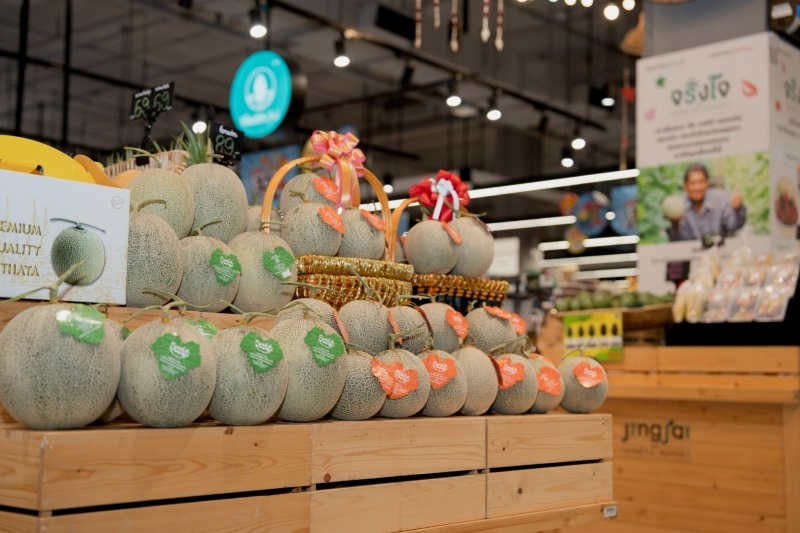
Jing Jai Maha...Nakorn - Discover Local Treasures from Communities Across Thailand, Right in the Heart of the City
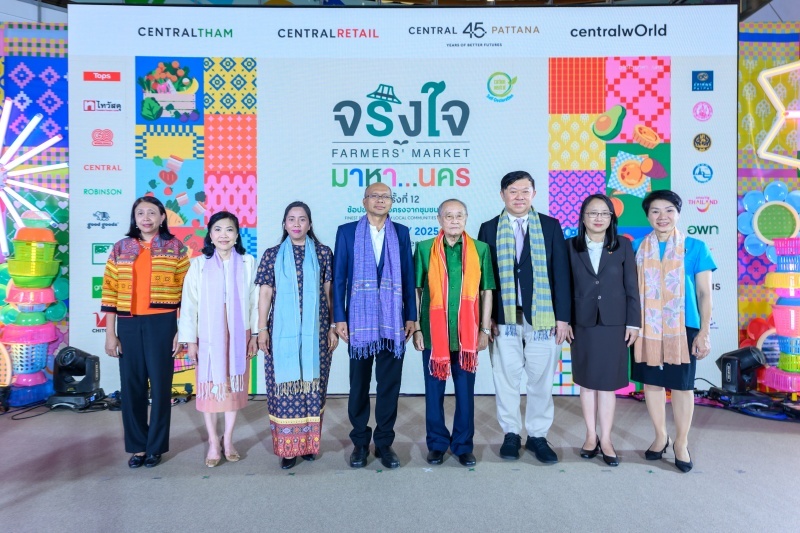
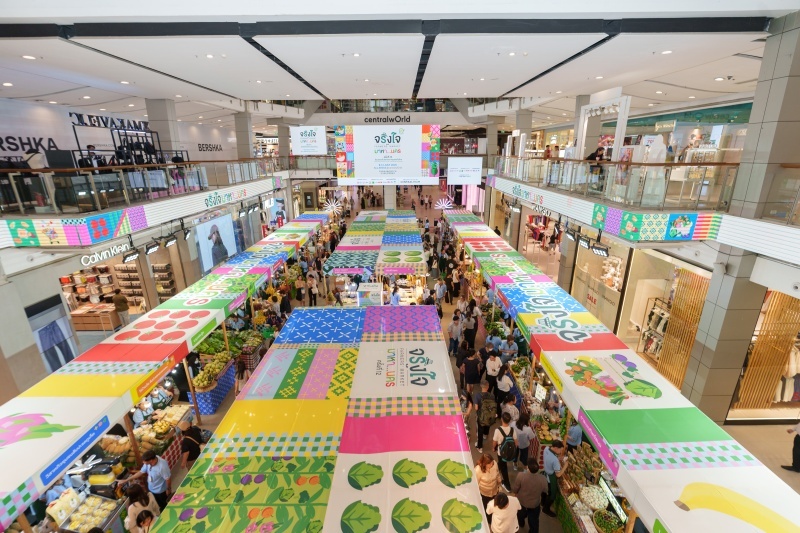
The ‘Jing Jai Maha… Nakorn’ event has organized to bring together products from communities and farmers nationwide under the concept ‘Jing Jai in the Heart of the City: From Roots to Radiance’, effectively bridging the gap between consumers and local farmers. Featuring over 1,000 local highlights from 50 communities across 47 provinces, the event showcased products available at Tops, Thaiwatsadu, and GO Wholesale. It offered activities across 7 zones for a complete shopping and dining experience, held from July 9–13, 2025, at centralwOrld.
This initiative generated income directly back to local farmers, reinforcing the goal of enhancing the quality of life for Thai people by providing a platform for farmers and communities to engage with consumers directly. Attracting more than 114,000 visitors and generating over 6.5 million Baht for the communities, the event was more than just a shopping festival but also was a platform to demonstrate the Creating Shared Value (CSV) concept. This reflects Central Group’s commitment to fostering business growth that moves in harmony with sustainable community development.
Furthermore, Central Retail continues to support local products through the ‘Jing Jai Farmer’s Market’ project, which serves as a dedicated space for local farmers to offer safe products and community specialties within Central Retail’s business units. This allows farmers and consumers to meet, exchange feedback, and collaboratively develop the local product development. In 2025, Jing Jai Farmer’s Market expanded to 34 branches, supporting over 12,551 households and generating 232 million Baht in community income.
Performance Summary 2025

Generate an income for farmers and communities
Donation and Support to public health and charitable organizations

Our Stories
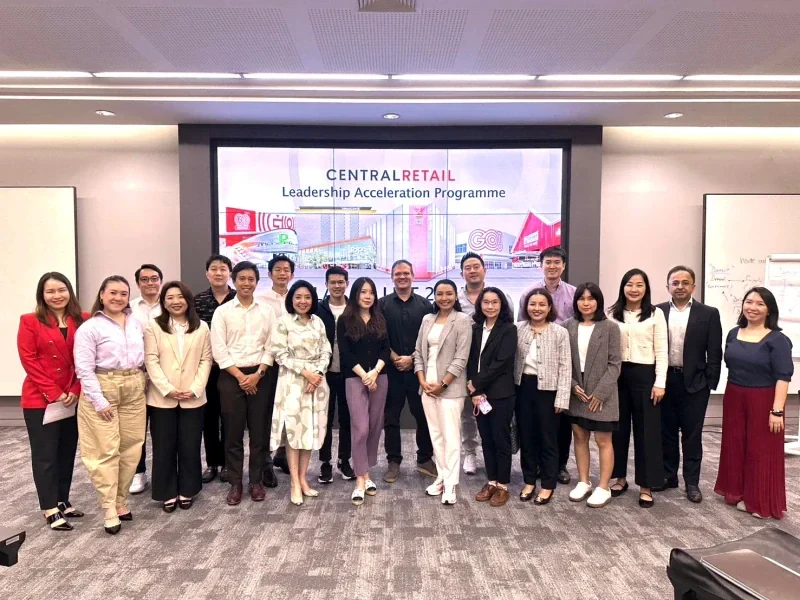
Strengthening People Capabilities, Developing Future Leaders, and Building a Learning Organization
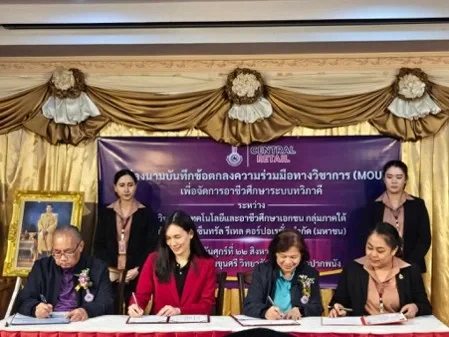
Dual Vocational Education Scholarship Program: Creating Educational Opportunities, Developing People, and Building a Sustainable Future